
Those that know your name: Prestige and Handler rules for towns
Game Design Log #54

Hi everyone, long time no see!!
After a looong time I’m finally returning to the substackverse, initially with a two-post-a-month frequency.
It has taken me this long to write a post because this year I’ve been navigating a complete redefinition of my daily life. Returning to my homeland after eight years, I’ve had to discover new places and reconnect with the circles I’d left behind. Among the challenges has been rebuilding a home—a process that takes time, both in terms of social connections and the practical aspects of setting up a house. But as of last week, I can finally say that I have a home.
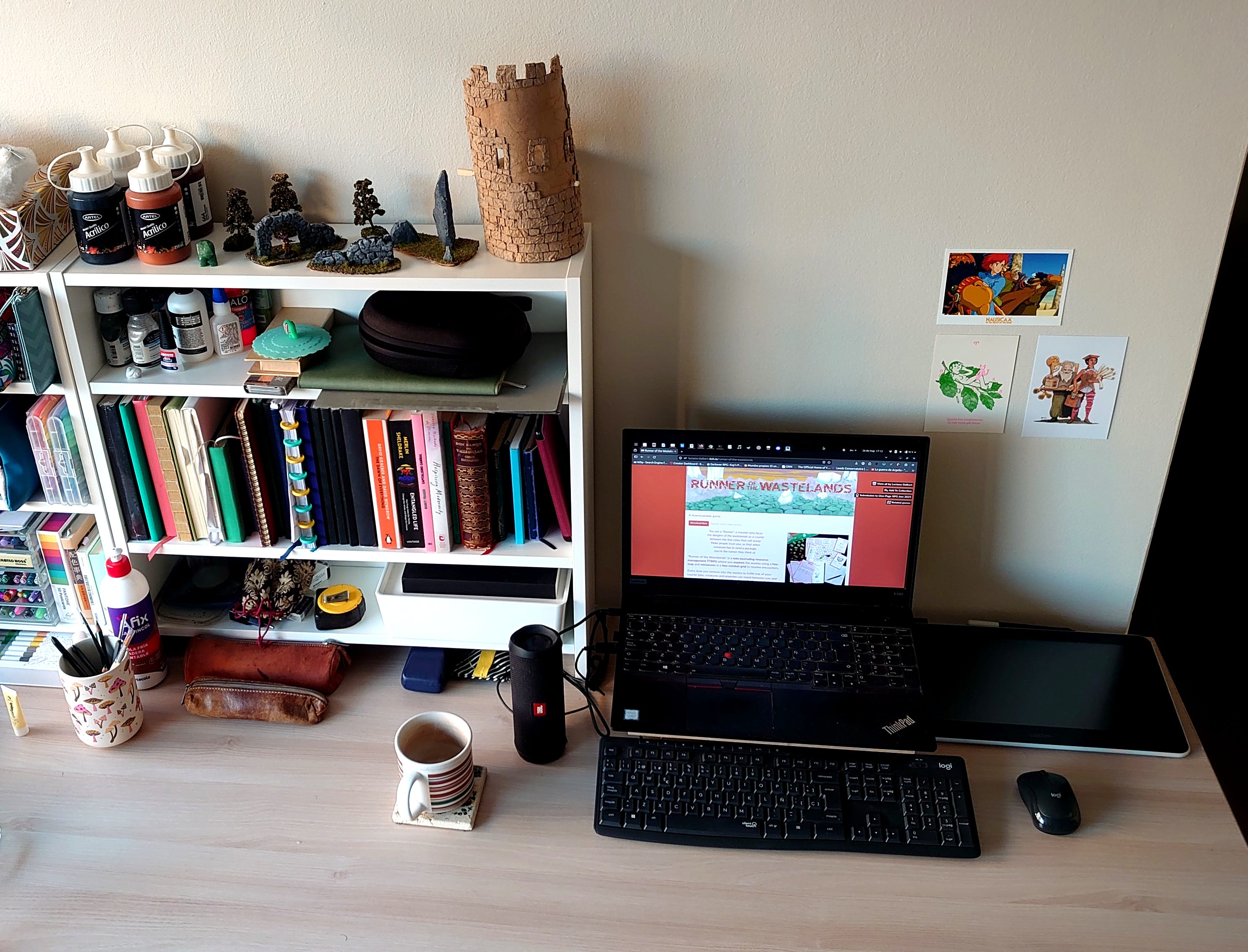
I've managed to fit most of my things in here. It's not a spacious place, but it's cozy, and I've gathered all my games and miniatures on tall shelves that line the walls. Most importantly, I have a comfortable desk where I can really get into my writing, and I’m very close to most of my friends.
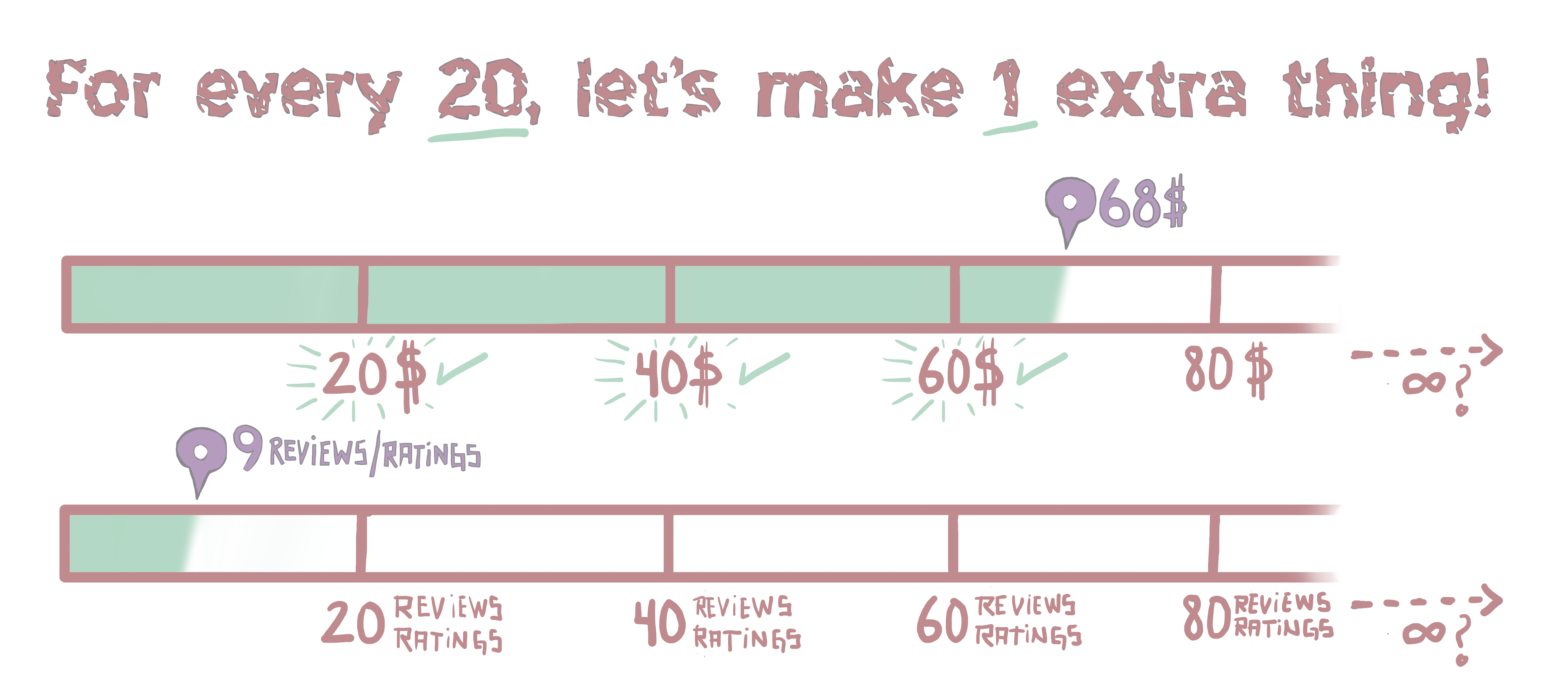
So, as a first hello from my new home, I wanted to share the latest updates on “Runner of the Wastelands”!, because we reached the third goal of $60! (also at DriveThruRPG)
I was popular for a week!
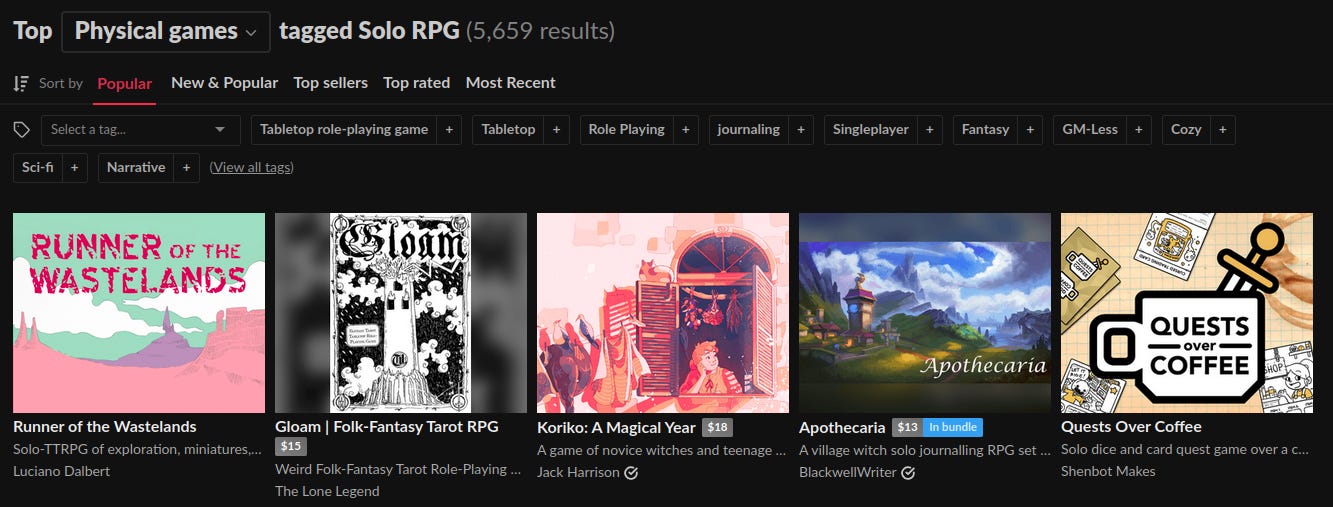
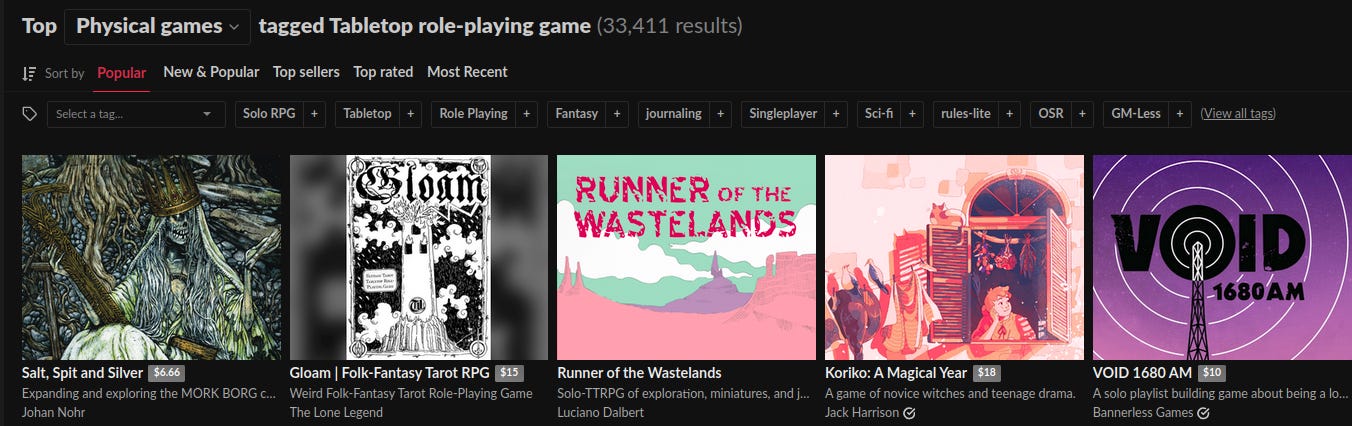
As a quick first update, I just want to share my surprise at what happened during a truly magical week this May, when Runner of the Wastelands became the most popular solo RPG on itch.io and the third most popular TTRPG overall.
I don't know how this happened, but a huge wave of people downloaded the game. So a massive thank you to everyone who helped spread the word!
But enough about past glories—now I want to show you what’s included in the third expansion!
Of prestige, my handler, and the people I know
When playing Runner of the Wastelands, I realized I wanted more gameable elements to interact with when visiting towns. In particular, I needed an impactful, mechanical way to tie in my character's history as a runner in each location—a gameable piece that allowed me to leave my mark on each town.
My vehicle for this was the concept of “prestige”—a record that directly affects how much you can charge for your services as a runner—and a new archetype, the handler, designed to show another way runners impact the societies of the wastelands.
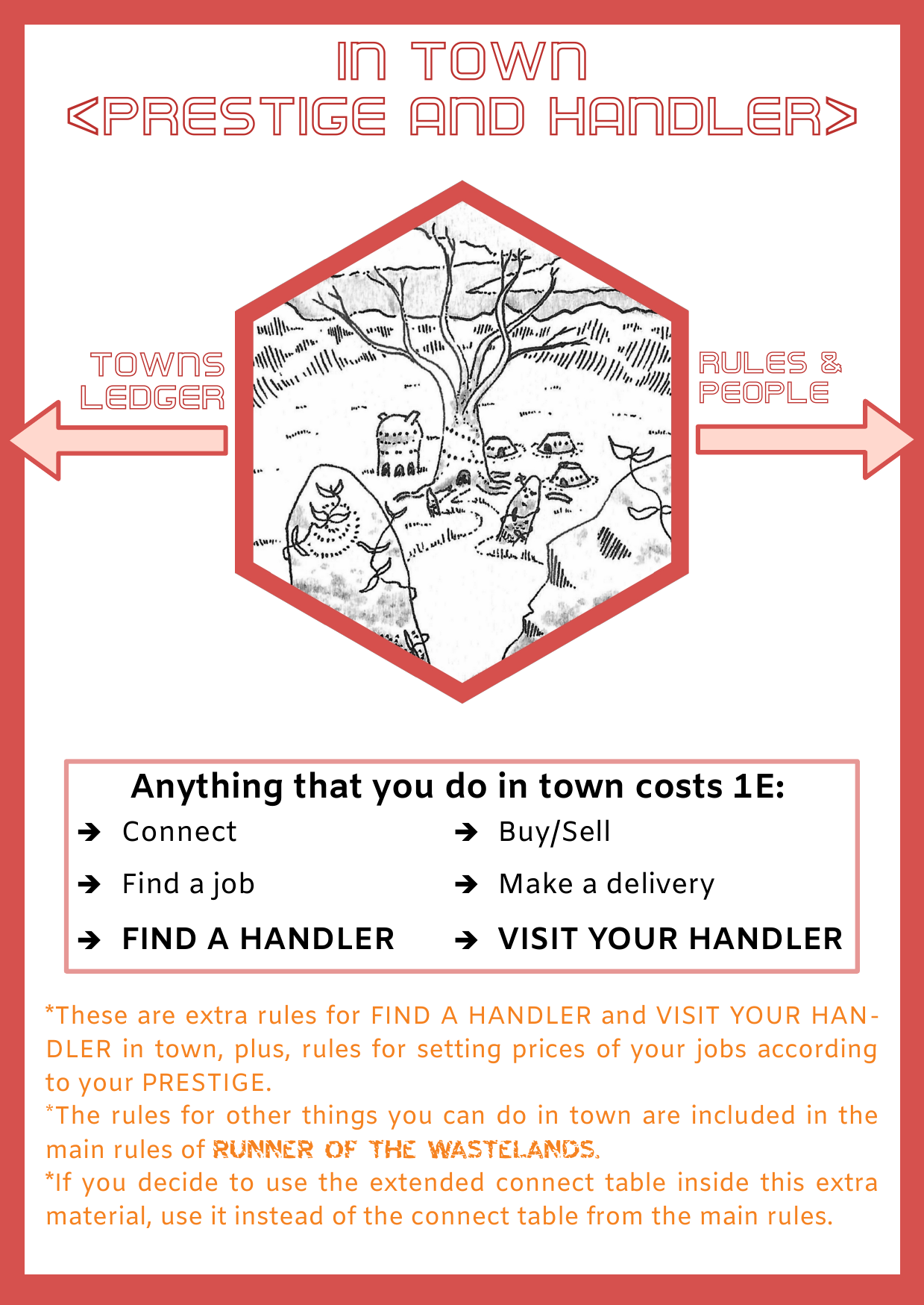
Prestige
Since I wanted to maintain the simplicity of the rules, I tried to make prestige a way to show your character's advancement and interactions with the world, without the need for complex, person-to-person or faction-to-faction notekeeping.
The easiest solution I found was to create a prestige score for each town (there is a maximum of 10 towns in Runner of the Wastelands), which depends directly on how effective you are as a runner and determines how much you can charge in each town for your next job.
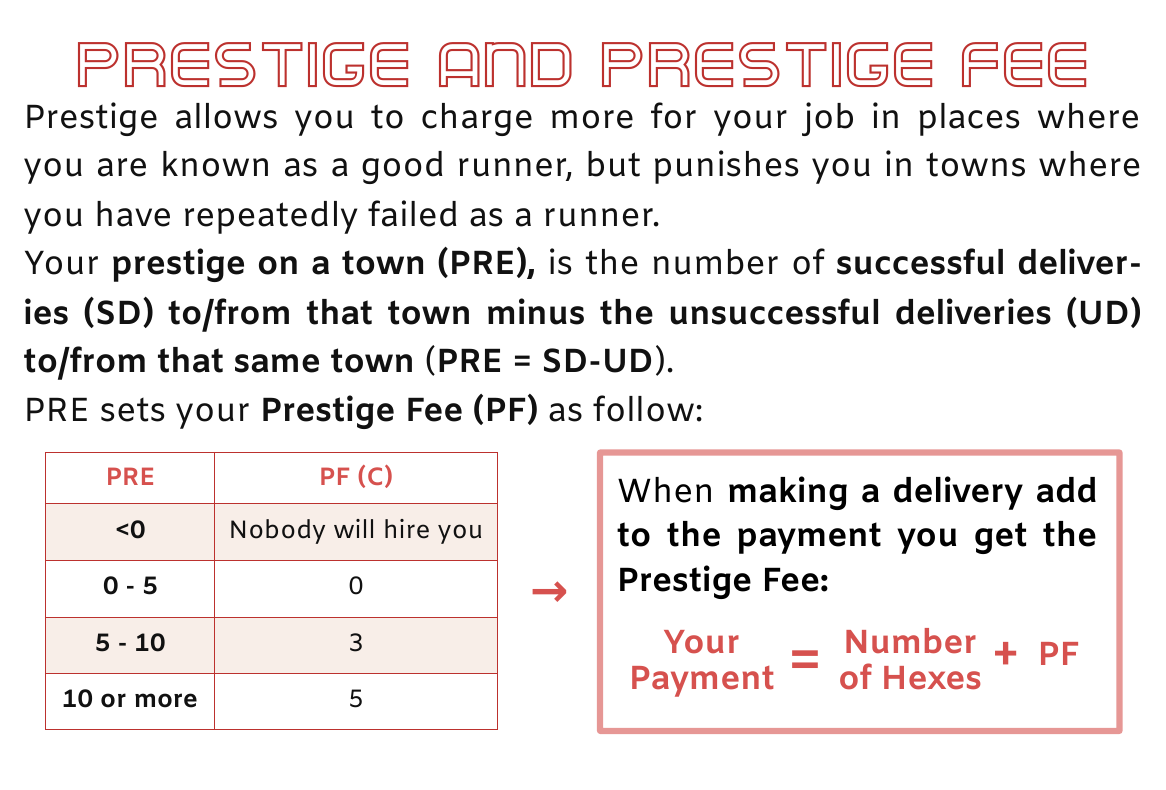
This simple score includes the possibility that failing a job will damage your prestige so badly that nobody in that town will hire you anymore. However, since your prestige depends on jobs both from and to that town, you can always rebuild your reputation by delivering packages to them coming from another town.
Handler
Handlers were an idea that came second in this exploration of the relation between runners and the townsfolk. In my mind, handlers originally started as a guild of runners. However, the mechanics I began to build to manage that guild—and its influence on your runners and their jobs—became too cumbersome. I tried to create a network of interconnected assets, which was interesting but not simple enough. After a couple of tries, I reduced the scope of the idea and disconnected the people of this guild, who previously worked as connections to get better jobs. They became handlers: unaffiliated agents who use their connections in each town to find you jobs.
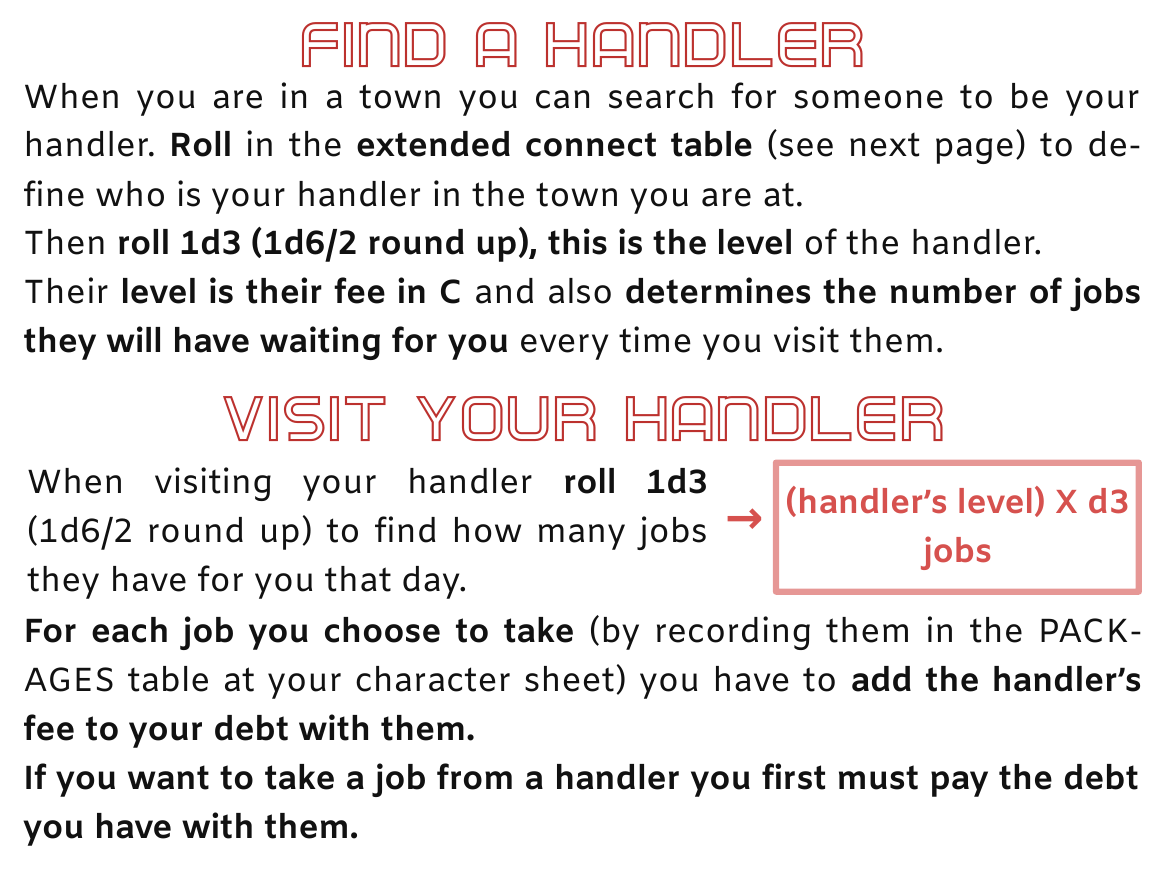
In essence, they do the work for you, so you expend less energy searching for more jobs (for just 1E, you can get 1 to 9 jobs). But then the question was: okay, you can get more jobs for the same 1E you spent before for a single job, so… what is the catch?
To answer this took some trial and testing. At first, I thought that they would take a cut of the money for themselves for each job. It was a logical approach, but the problem is that you get paid upon delivery, so how does that make sense narratively? You deliver the package, and somehow part of the money magically teleports to the handler? Also, if that were the case, I would have to keep a record of which handler gave me which job, making everything much more messy.
After some thought and playtesting, I arrived at a solution: debt. For every job you get from a handler, you incur a debt with them. If you don’t pay that debt, you can’t ask them for more jobs.
This not only makes things simpler, but also provides an extra narrative outcome that sprouts directly from this mechanical aspect of the game. It allows you to explore how this debt affects your character and forces you to think about how to manage your other jobs in order to fulfill that debt that you have with your favorite handler.
In addition to this, I added a random factor to how many jobs you get from a handler depending on their level, and things ended up looking like this:
To keep track and not panic
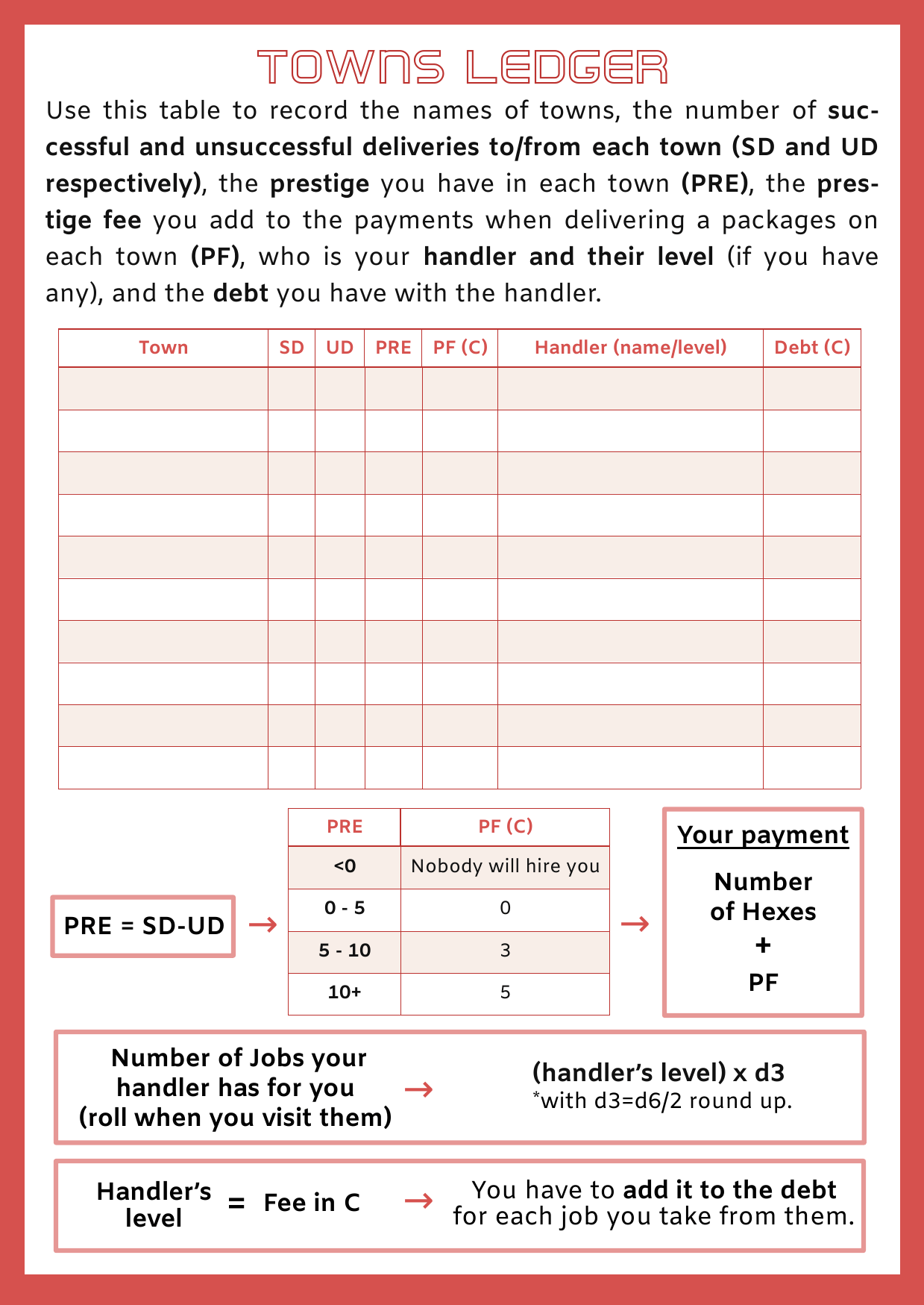
To manage all this I made a simple table, or ledger, where you can track everything you need to determine your Prestige (PRE) and Prestige fee (PF) in each town, plus, space to record your handler and the debt you have with them.
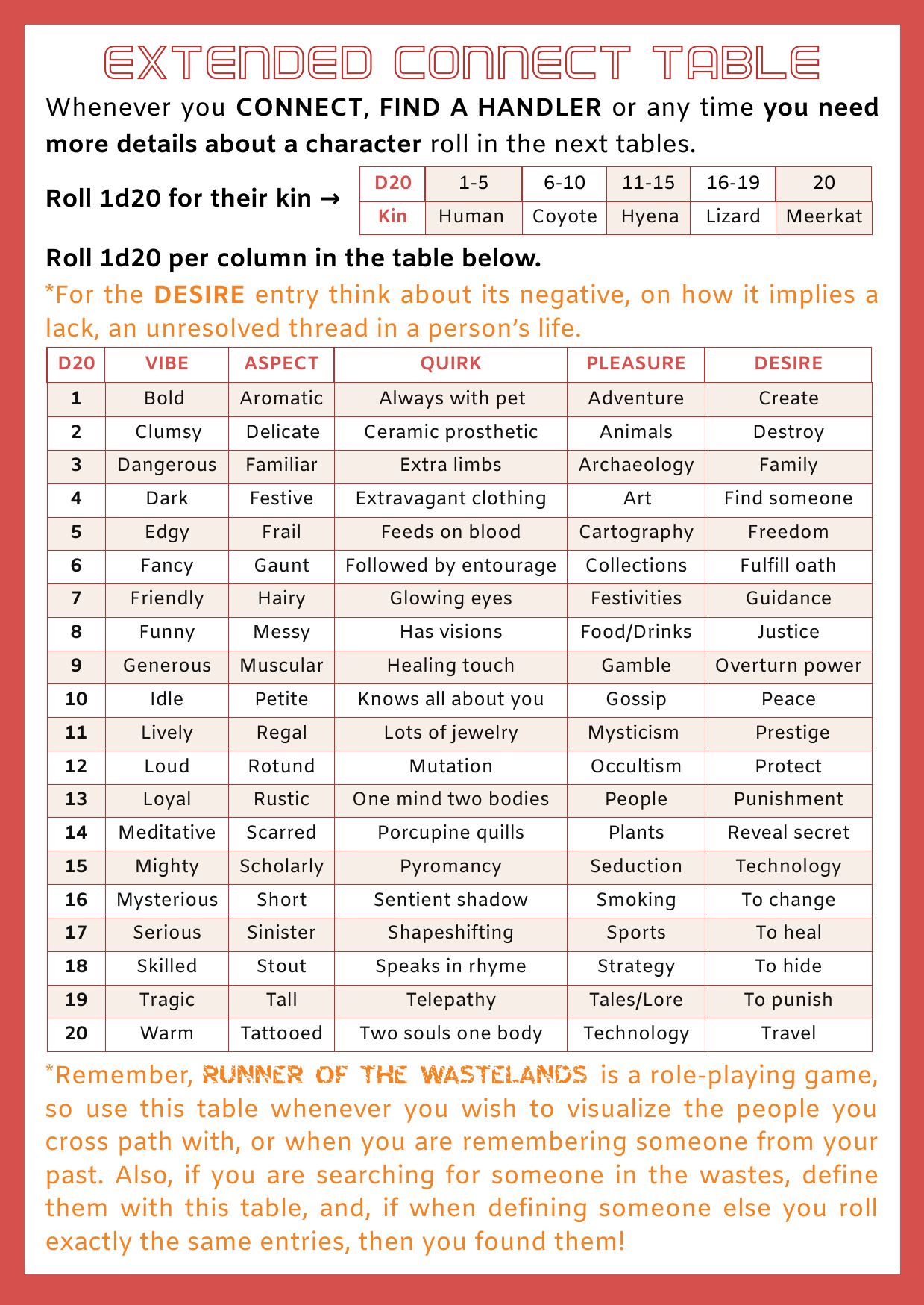
Extended connect table
Since handlers and prestige add more dimension to the game when you are in a town, I felt it was a necessity to expand the table of people you can meet in each town to allow for more variety and avoid repetition. I also decoupled the “kin” of these characters from all their other “aspects”. This is something I dislike about the connection table in the core rules, but hadn't changed previously due to space constraints.
What if you don’t want to add all this mess to your game?
As with all the extra rules I have made for Runner of the Wastelands, these are purely optional, even on a session-to-session basis, as sometimes I want to play the game just with the core rules, and others I need more depth to the mechanics.
So when you are using them feel free to choose and mix them as you wish!
This is it for today. If you want to see more extra material for “Runner of the Wastelands”, remember that you can help by buying it, sharing it with your friends, or commenting/reviewing it on itch.io, DriveThruRPG, or Wargame Vault. For every 20, let’s make 1 extra new thing!
Also, I have been slowly working on “No Peace for the Heathen”, but I have some updates I will share with you in the next post.
See you in two weeks!
I don't know how I happened upon your Substack and this post, but I just dropped a few bucks on this project not only because it looks cool, but because this post is such a fascinating read for someone who is into game mechanics and possibly creating their own games (e.g. me). I love how you share your thought process and make everything so easy to read and logical. It's really inviting for someone who could have an interest in your game (e g. me again).
I look forward to more, and welcome home :)